
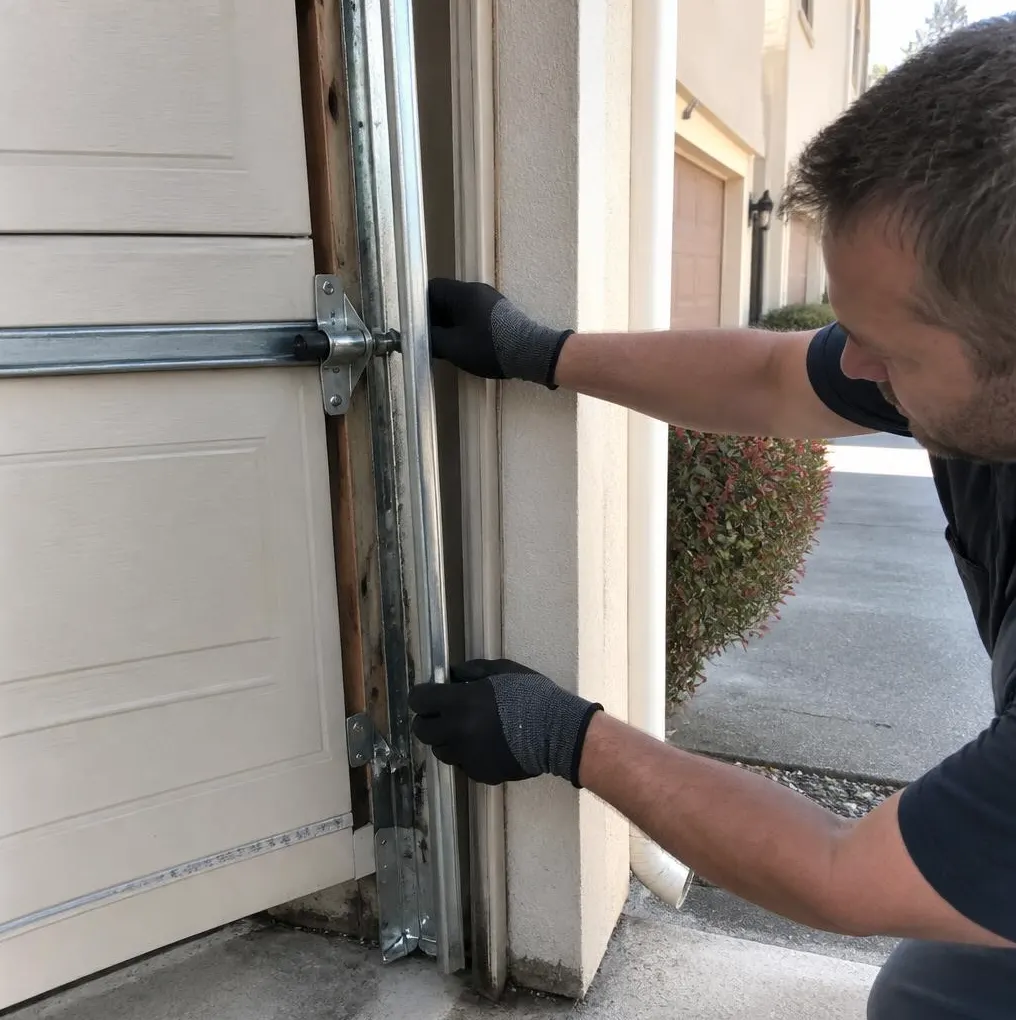
The Mistake Most People Make First
Most homeowners judge their garage door's health by watching it run on the opener. If it opens and closes without grinding to a halt, they assume everything underneath is fine. It's an easy mistake to make — the opener is strong enough to drag a door through resistance that it should never have to fight in the first place. So the door looks normal right up until a cable snaps, a gear strips, or the opener just stops lifting the door at all.
The real test for balance has nothing to do with the opener. It means disconnecting the opener and moving the door by hand. That step gets skipped constantly because it feels like extra work, or because people simply don't know the release cord exists. But it's the only way to find out whether the springs — not the motor — are doing their job.
What an Unbalanced Door Is Actually Doing to Your Opener
Garage door springs are supposed to carry almost all of the door's weight. The opener's motor is only meant to provide a small push to start and stop the motion. When springs lose tension — which happens gradually with age, and faster through repeated cold snaps and humid summers — the opener has to pick up the slack. Over time that shows up as:
- A motor that runs hotter and louder than it used to
- Gears, belts, or chains wearing out years ahead of schedule
- The opener's travel limits drifting, so the door stops short or reverses unexpectedly
- A door that opens fine but closes with a hard slam, straining the drive mechanism each cycle
In the Back Mountain, this matters more than it might elsewhere. Freeze-thaw cycles stiffen torsion springs and tighten tolerances on older tracks, and a lot of the housing stock here still has original doors and original springs. A door that was marginally balanced in July can become clearly unbalanced once overnight temperatures start dropping, right when you're relying on the opener most for a quick, cold-weather entry into the garage.
Tools You'll Need
- Work gloves
- A flashlight
- A step stool (only if your release cord is mounted high)
- Someone nearby if the door is heavy enough that you'd rather not catch it alone
Step-by-Step: Testing Garage Door Balance
- Close the door completely. You want to start from a fully seated position so you can judge the full range of motion.
- Locate the emergency release cord. This is the red-handled cord hanging from the trolley on the opener's rail. Pull it straight down and toward the back of the garage to disconnect the door from the opener. You'll hear or feel it release.
- Lift the door by hand to about waist height, roughly three to four feet. Use both hands and lift slowly and evenly.
- Let go and watch what happens. A properly balanced door will stay put, or drift down only an inch or two. A door with weak springs will fall on its own. A door with over-tightened springs will shoot upward.
- Repeat the test at a second height, such as fully open or around shoulder height, since some doors feel balanced in one position and not another — a sign the spring tension is uneven rather than just low.
- Listen while you lift. Popping, banging, or a grinding sound from the spring area is worth noting even if the balance itself seems acceptable.
- Reconnect the opener by pulling the release cord again (or running the opener briefly, which usually re-engages the trolley) before using the door normally again.
What's Safe for a Homeowner, and What Isn't
The manual lift test above is safe for most homeowners to perform. So is a visual check of the springs for visible gaps between coils, rust, or a spring that looks stretched compared to its neighbor on a two-spring setup. Noting how the door sounds and behaves is useful information to have even if you're not doing any repair yourself.
What's not a DIY job is adjusting or replacing torsion springs. These springs are wound under extreme tension, and the tools and technique required to safely add or release that tension aren't something to improvise with. This is also true of adjusting cable drums or recalibrating the opener's force and travel settings after spring work — get that wrong and you end up with a door that reverses on obstruction sensors incorrectly, or worse, one that doesn't stop where it should.
When to Call Dallas Garage Door
If your door drifted noticeably during the manual test, made unusual noise, or you noticed uneven lifting between the two sides, it's time to call in a technician rather than keep running it on the opener. Dallas Garage Door can measure actual spring tension, inspect cables and drums for wear, and handle Spring Replacement safely with the right winding bars and clamps. If the imbalance has already been pushing the opener hard, we'll also check it as part of our Garage Door Maintenance service — verifying travel limits, force settings, and hardware so the new springs and the existing opener are actually working together instead of fighting each other through another Back Mountain winter.
If you're in Dallas, Shavertown, Trucksville, Harveys Lake, Lehman, Kingston, Luzerne, or Forty Fort and your door didn't pass the balance test, give Dallas Garage Door a call before the first hard freeze. A quick inspection now is a lot cheaper than an opener replacement later.